
Why Coffee Shops Are the Worst Place for Important Work
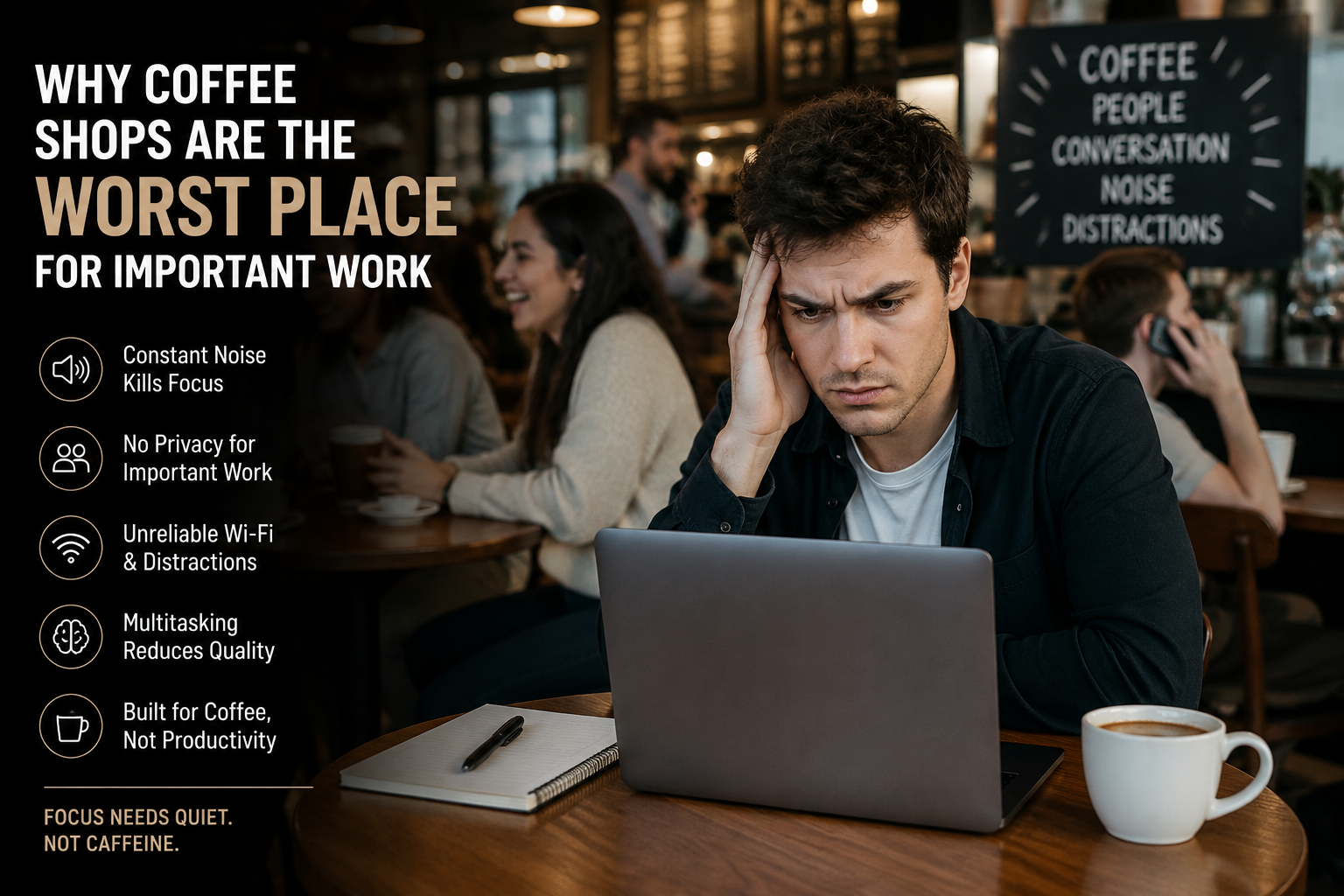
When most people think about getting work done outside the office, coffee shops are usually the first option that comes to mind. The atmosphere feels productive, the coffee keeps flowing, and the background noise can seem motivating at first.
But when it comes to important work — deep thinking, client meetings, studying, interviews, strategy sessions, or tasks that require intense concentration — coffee shops are often one of the worst environments possible.
Here’s why:
1. Constant Noise Kills Deep Focus
Coffee shops are designed for social interaction, not concentration.
Between loud conversations, espresso machines, music playlists, ringing phones, and people constantly walking around, your brain is forced to repeatedly shift attention. Even small interruptions can reduce productivity and increase mental fatigue.
Research consistently shows that noise negatively affects concentration, memory, and cognitive performance. What feels like “productive background energy” often becomes a major distraction when you’re trying to focus on meaningful work.
If your task requires critical thinking, problem-solving, or creativity, noise becomes your enemy.
2. Privacy Is Almost Nonexistent
Important work often involves sensitive information.
Whether you're discussing client projects, attending virtual meetings, handling business finances, or preparing for interviews, coffee shops offer little to no privacy. You’re surrounded by strangers, and confidential conversations can easily be overheard.
This creates unnecessary stress and limits your ability to work comfortably.
Professionals today need spaces where they can think clearly, speak freely, and work without constantly worrying about distractions or privacy concerns.
3. Coffee Shops Were Never Built for Productivity
Most coffee shops prioritize customer flow, social engagement, and atmosphere — not focused work.
Limited seating, unstable Wi-Fi, crowded tables, lack of charging outlets, and uncomfortable environments can quickly turn a work session into frustration.
You may arrive intending to work for hours, only to spend half your time adjusting to distractions or searching for a quieter corner.
The truth is simple:
A space built for socializing rarely supports deep productivity.
4. l Multitasking Environments Reduce Work Quality
Coffee shops create environments where your attention is constantly divided.
Your brain processes conversations, movement, music, notifications, and surrounding activity all at once. Over time, this reduces the quality of your thinking and slows down your workflow.
You might feel busy, but busy doesn’t always mean productive.
Deep work requires intentional environments — spaces designed specifically to help people focus without interruption.
The Rise of Quiet Workspaces
As remote work continues to grow, more professionals are searching for alternatives to noisy public environments.
People want:
Quiet spaces for focused work
Private environments for meetings and calls
Comfortable work areas without distractions
Flexible workspaces without long-term office commitments
The future of productivity is shifting toward intentional, private work environments that support concentration and mental clarity.
Final Thoughts
Coffee shops may work for casual tasks or quick browsing sessions, but they are rarely ideal for important work that demands focus, privacy, and high-quality thinking.
Your environment directly affects your productivity.
If you want better results, fewer distractions, and deeper concentration, choosing the right workspace matters more than most people realize.